
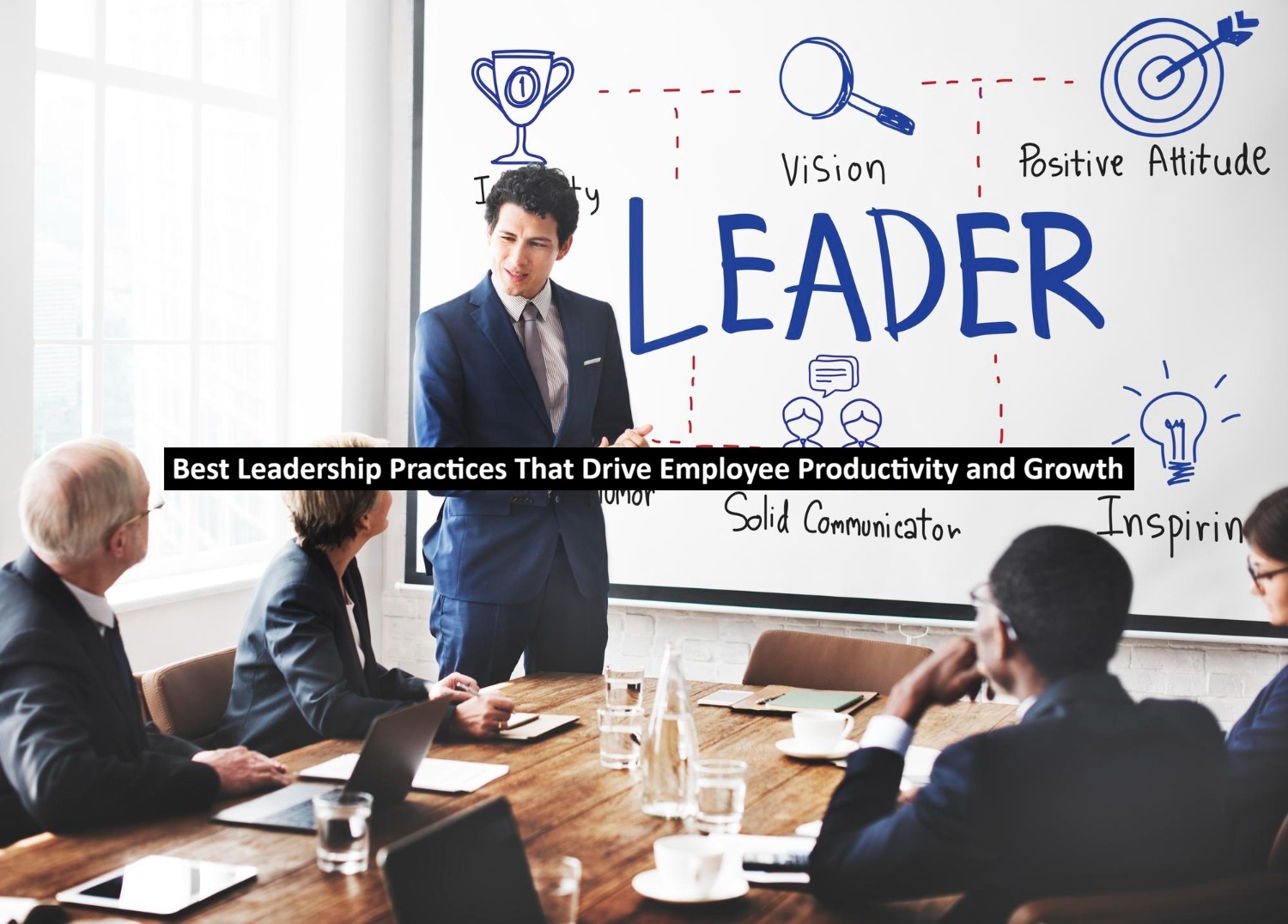
A healthy work environment can drive growth faster than ever! As an employee, if you look forward to working in an organisation, it means that you value the work. However, as a leader, your work is to ensure performance, workforce stability, & engagement.
A recent survey concluded that high-performing & supervising leaders or managers can increase collective output by 30%. Also, more than 60 % of employees have stated that they would work harder if their efforts were recognized.
By adopting best leadership practices, you can genuinely inspire teams, improve work culture, & drive organisational success.
Rather than relying on a hierarchical management system, you need to adopt a flexible approach to drive employee productivity & growth. Let’s further delve into the topic and see how you can do that.
Align With the Purpose
Aligning with the purpose is the key strategy to drive employee growth. How will you do that? Well, you need to set realistic & measurable milestones in the employee experience.
If possible, use a framework like SMART (specific, measurable, attainable, relevant, time-based) goals to maintain the purpose. Apparently, connect work to outcomes.
You can link daily responsibilities to a broader organisational purpose. By doing so, you will motivate your employees to do their best. Moreover, it’s important to focus more on deliverables. The best way to do so is to measure employee success by work done rather than hours tracked.
Read:
Ensure Safety & Optimize Dialogue
As mentioned above, a safe & healthy working environment improves productive output. For this, you need to cultivate psychological safety so they can easily flag ideas & risks.
Of course, innovation will thrive when your teams don’t fear results. Apart from psychological safety, you must support work-life balance & also address work-related friction (if any). By reducing admin burnout, you can preserve the team’s cognitive capacity.
Further, you need to work on accelerating feedback. This means you can deliver a mix of positive & constructive feedback from time to time. This allows employees to change course before a crisis occurs. Along with this, optimize dialogue, i.e focus more on open communication. Try maintaining regular one-on-ones.
Empower Growth Capacity
As a continuation from the above point, you can initiate coaching conversations. What does it mean? Well, it means you can guide your employees through business obstacles instead of solving problems for them.
Of course, this can build long-term problem-solving capacity. Moreover, you can hand total control & tasks (for the expansion) to team capacity.
You can align recurring tasks with an employee’s unique talent. This will motivate your employees to take pride in their results. Subsequently, you can empower growth capacity by providing targeted training. Most training programs also personalise learning using performance review & data.
Read: What Is Commerce Investigate: Strategies, Sorts & Examples
Take Accountability & Recognise Efforts
Another leadership practice you can adopt is to take accountability. You must define ownership for every project milestone. Of course, your team will perform better when they know about shared responsibility.
Moreover, you can build an ecosystem in which teams praise one another. Highlighting specific contributions during team meetings will reinforce positive behavior & collective morale.
As part of your effort, you can create clear templates & documentation for recurring tasks. Recognising efforts & eliminating operational friction can save intellectual energy for creative problem-solving (for a broader approach). The best part is that you can enhance operational excellence by taking accountability.
Follow an Inclusive Decision-making Approach
If you value team suggestions, give your employees a platform where they can put forward their creative suggestions; it can do wonders for productivity.
The best way to do this is by involving teams in decisions. Consult your employees on major decisions that can impact workflows. Ask your employees to review project relevance regularly so they can stop initiatives that no longer serve a purpose.
In short, ask them to normalize adaptive pivots. It’s important to allow autonomy wherever possible because flexibility can reduce burnout. With this, your employees can accommodate diverse operational styles.
Optimize Process & Resource Allocation
The next defined practice is to allocate resources & optimize the process to make things easier. For this, you can encourage your employees to audit workloads.
By doing so, they can balance workloads effectively & ensure there is no single workload. Also, upgrade software & productivity tools that can save time.
AI-integrated CRM & ERP tools can eliminate daily lag. Of course, slow systems can cause frustrations, leading to employee demotivation.
By establishing unified platforms, you can centralize data – with a single management system- which can break down silos. Apparently, most companies also deploy software analytics to track individual output & live hours. Focus more on key outcomes rather than hours clocked.
In addition, you can break large projects into small iterative cycles; this will allow real-time shifting of key personnel. The more you optimise working processes, the better results you can expect for employee productivity & growth.
Key Frameworks To Implement:
Proven frameworks & leadership practices can develop a culture of employee growth and productivity; here are some key frameworks you can follow:
- Objectives & Key Results
You can use this as a collaborative framework to align (different) strategies with team execution.
- Balanced Scorecard
This is a flexible management system that balances internal operational metrics with financial outcomes (of the company).
- Hersey-Blanchard Situational
This is a leadership approach through which leaders can directly adapt employee capability & preparedness.
- Transformational Approach
It is a leadership approach that can help you focus beyond traditional compliance. It’s primarily built on 4 important I’s:
- Inspirational motivation
- Individual consideration
- Intellectual stimulation
- Idealized influence
- Competency-based Framework
It works as a blueprint (mapping) for specified behavior indicators, encouraging long-term career growth.
Wrapping up,
Eventually, leadership practices that drive employee productivity & growth rely on building trust, transparency, & adaptability. Rather than following strict oversight, it’s important to maintain flexible management that accelerates performance (naturally).
For leaders, it has to be a critical shift from overseeing to enabling & prioritising more on human-centric systems. Of course, integration (with) AI tools in management also plays an important part.
Lastly, you must define clear goals & give your employees the operational flexibility to figure out plausible outcomes. After all, effective leaders inspire others to grow & turn vision into reality.
Author’s Bio:
Harikrishna Kundariya, a marketer, developer, IoT, Cloud & AWS savvy, co-founder, Director of eSparkBiz Technologies. His 15+ years of experience enables him to provide digital solutions to new start-ups based on IoT and SaaS applications.